Saturday, February 21, 2015

MOVIE REVIEW: Life Itself

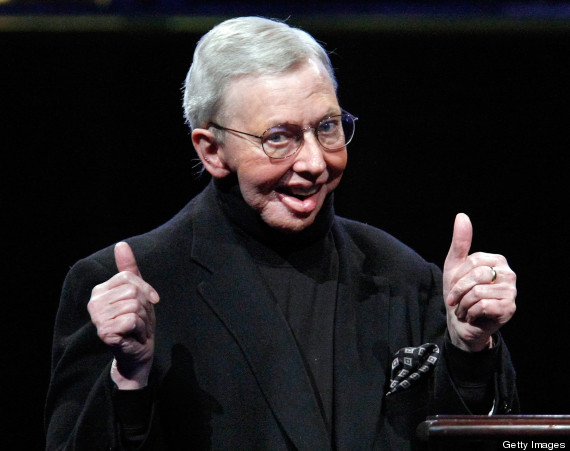
Roger Ebert was considered one of the greats, and is considered by many to be the greatest film critic to ever live and an example to aspire to (I'll include myself in that group!). His reviews were often entertaining and always showed a thorough understanding and a love of film as entertainment and as art. Roger Ebert is the man I look towards as I write these reviews and whatnot. Through him countless people and film fans were introduced to some of the greatest films of all time and then some. His writings were exceptional, his civil rights advocacy in the film community and abroad was admirable, and now his life is memorialized in Steve James's documentary, Life Itself, inspired by Ebert's memoir of the same name.

Rated R for brief sexual images/nudity and language
The film explores different times of Ebert's life: his early upbringing, his work with sexploitation director Russ Meyer, his marriage to Chaz, his time with Gene Siskel, and ultimately his final days. During exposition (which is often), we hear the voice of Roger reading excerpts from his memoir. In reality, it's a voice artist who is doing an Ebert impression, but it sounds so like him that it's like hearing Roger's lost voice giving his audience some last words. The documentary is moving in many regards. For those who had followed him since he and Siskel began "At the Movies" or "Sneak Previews," or those who only recently began reading his reviews of past movies, seeing him live his final months won't be a cheery experience. At the same time, many parts made me laugh.

But the film's greatest strength and beauty is its pathos. Above all things, Life Itself is a story of love and redemption: the story of how two alcoholics could break the addiction and find love so close, the story of how a man loved the movies, the story of two colleagues as close as brothers, the story of how two film critics brought filmmaker Martin Scorsese to keep going through hard times because he got loving, constructive criticism for that which he loved. It's a beautiful film no matter what you thought of Roger because there's so much more to it. Roger Ebert is painted as an imperfect man, a man who has gone through terrible times, one who has dealt in vanity--many of the interviewees bring forward Roger's faults--but a good man nonetheless. But that's just life itself, and through Roger's story we can see this.

It's informative but not overbearing. It's personal but not exclusive. It's favorable, but not untrue. It deals with life and death, but it's not depressing. The film shows us that life is more than what we like and dislike (say, movies), but every facet of our existence: love, family, friends, death, disease, and the little things, too. The archive footage between Siskel and Ebert bantering is delightfully hilarious as they ever were, Martin Scorsese's stories of Roger are surprising and shows the impact one man can make, and Chaz talking about her relationship with Roger reveals a side of Roger many people didn't know.

Director Steve James directed Roger's favorite film of the last decade, Hoop Dreams, and Roger was one of the most vocal people decrying that film's snub at the Oscars. Unfortunately, the trend continues as this film was one of the most evident snubs at this year's Academy Awards. It's an outrage that this film wasn't nominated, but alas the film still is fantastic. CNN has been showing it (that's how I saw it) and the DVD/Blu-Ray was recently released so if you get a chance, please see this movie. It may just be the best of the year. As for scoring, there's nothing more fitting that I can give it than:

Two Thumbs Up!


Roger Ebert: RIP 1942-2013

Tuesday, January 6, 2015

MOVIE REVIEW: God's Not Dead

God's Not Dead is not a bad film, but by no means is it the return to form for Christian movies that it is heralded to be. Indeed, with it being the champion in what could have easily been considered the Christian Film Renaissance (with at least 12 Christian/Biblical movies released theatrically in 2014), I would have hoped for a bit more than what is really a bloated ensemble piece that cares too little for its characters in its effort to send a message that you already know by looking at the title.

Rated PG for thematic material, brief violence, and an accident scene
The trailer promises that the film will deal with the debate of God's existence between professor and student, and for the most part it does. Shane Harper (Good Luck Charlie) plays a college freshman who refuses to deny God's existence because that's not what he believes. His philosophy professor (Kevin Sorbo, Hercules: The Legendary Journeys, Soul Surfer) challenges him to "prove the antithesis," which he valiantly and persistently does over the course of the film. However, one of my biggest gripes with the film is that the plot is too bloated, and it feels like it. The main plot, as described above, sounds really promising and it is inspiring, displaying a true role model for Christians. Yet if it had just focused on and thoroughly developed that plot, along with the relationships of professor and student (with pastors, significant others, fellow classmates), it would have had the potential for greatness, especially when we're inundated with under-par Christian films. Instead, the filmmakers felt it was necessary to add in way too many subplots, such as: a seemingly anti-Christian reporter who faces a major tragedy, a atheist son who hates his dementia-afflicted mother, a pastor and a missionary experiencing a series of unfortunate events with their car, and a girl raised in a Muslim home challenged for her Christian faith. None of them are significantly related to the main plot or to each other, and the last one is hardly in the film, making me wonder why it was even included at all. Furthermore, the cameos by the Duck Dynasty crew feel so forced. I understand that because of the A&E show their presence would get butts in seats, but they felt extraneous. Their only purpose is to make redneck jokes and deliver the message of the film...which is the title.

The ending even feels unearned. In time, the professor finds redemption after being met with tragedy, and at that moment, we the audience are supposed to cheer (or be crying because that was actually a well-done scene). This is going to have a dramatic impact on the remainder of the film, yes? Nope! Instead we cut to an event that condemns the professor and praises the kid for standing for his beliefs...before making a direct appeal to the audience to share "God's Not Dead" via text to their friends. So everything leading up to this--the mother with dementia, the reporter with cancer, the outcast Muslim, the debates, the breakups, the comic relief of the pastors, the businessman who cares for no one--all led up to an appeal to send a text message? Come on! In that moment, all of the emotional buildup was lost. One could give the argument, "The people at the event didn't know what happened to him," but the screenwriter ought to have had enough integrity to keep the audience engaged in this new connection and resolution.

The acting is alright, with Kevin Sorbo and Shane Harper rightfully stealing the show. Sorbo is probably one of the better actors working in Christian media today, so at least we have him to look forward to. But even then, the power of his performance is inhibited by a weak script that has him a complex antagonist in one scene, and the dastardly caricature of an atheist in the next. Harper impressed me for the most part, breaking away from the Disney sitcoms he was once a part of, which is nice to see. Otherwise, though, the acting is meh. Standing out in my mind is Trisha LaFache, who plays the reporter in an overly cartoony performance when interviewing Newsboys and the Robertsons, sacrificing emotion for a soulless "hard-hitting news break" over-the-topness. That's not to say she doesn't convey emotion at all; when she is diagnosed with cancer, her sadness felt real. I'm just disappointed that Christian films are stuck in a rut with overall quality.

I'm not singing the film's praises because I don't feel it completely deserves it. The Lost World: Jurassic Park and Divergent did not get great reviews from me because, even though there were promising aspects, the films themselves were incredibly flawed. I don't feel a Christian film ought to get a pass from such criticism just because I happen to agree with its worldview. The fact of the matter is God's Not Dead has problems that severely hurt it. The movie generally feels like the filmmakers threw good ideas at the screen, hoping that something would stick, regardless of how they meshed. Some parts do stick, which the filmmakers try to use as an "out" for including unnecessary, unmeshable material in the script. That's an appalling way to look at making a movie. The Christian audience deserves better than that, but the film is so concerned with telling the "message" that deaths, cancer, being an outcast, and dementia feel sad because the idea of it is sad. It's purely sentimental, just like a Hallmark movie; we feel no raw emotion because emotion isn't developed. Even The Passion of the Christ wasn't sentimental, giving us flashbacks that develop the character of Jesus, making his death so much more heart-wrenching; you won't be getting much of that here.

It's my belief that a Christian-made movie should stand well on its own right, regardless of the presence of "the message." It's my belief that Christian movies should be held to a higher standard because of their goals. This one fails to do that, being a pretty mediocre drama regardless of your beliefs. Take, for example, M. Night Shyamalan's Signs. Regardless of what you thought of the ending, you cannot deny that that film was so tightly-knit together that everything felt necessary. That movie has strong Christian themes, but there's not that need to tell "the message." It stands well on its own. Why couldn't have God's Not Dead have done the same if it's mission is to reach the secular crowd? Why couldn't Christian audiences gotten a movie worthy of the $12 they paid at the movie theater? Wouldn't the message be more effective if it was part of a genuinely great film instead of being the film itself? Wouldn't it get secular audiences interested in a genre that is filled with more lackluster pictures than horror?

Kevin Sorbo delivers an acting performance worth seeing. Too bad the main story doesn't soak in all the limelight.
In short, this had the potential to be one of the Great Christian Movies, being a sleeper hit and all, and it just failed to do so. It placed less emphasis on the cake--character development, believable dialogue, meaningful direction, a sense of focus--and placed more emphasis on the icing--"the message"--and the sentimental sprinkles on top. It's not among the worst of Christian films, but I'd think twice (maybe thrice) before saying it's one of the best. A disappointment, I can only give this film 2.5/5 Stars, for its two leads and the positive examples displayed in the main plot. It's just too muddled for me to give it a more positive review. It may touch people, it may lead people to Christ, but a completely good movie it is not.

Did you see God's Not Dead? What was your favorite Christian/Biblical movie released in 2014? Whatever you have to say about me and the movies, comment below!

Thursday, January 1, 2015

Most Anticipated Movies of 2015

It's the same drill as last year; this is just a fun thing to do that I hope introduces you to other films coming out this year. No need for introductions. As Monty Python famously said...


Cinderella (March 13)
Dir. Kenneth Branagh; Star. Lily James, Cate Blanchett, Helena Bonham Carter
The successor to last year's Maleficent (which received mixed reviews), Cinderella, directed by the man behind the unforgettable Hamlet and Much Ado About Nothing films, aspires to be a faithful adaptation of the classic Walt Disney film from 1950 rather than a complete reimagining. Furthermore, Cate Blanchett and Helena Bonham Carter seem to offer strong performances, and overall, I feel it will be the heartwarming, perfect family movie it needs to be. After the gritty retellings of Sleeping Beauty and Alice in Wonderland, perhaps this too will be a breath of fresh air before Disney does a live-action Pinocchio in May (more on that later).

The Water Diviner (April 24)
Dir. Russell Crowe; Star. Russell Crowe, Jai Courtney
This one seems weird to put on here, but for some reason I want to see it. This one stars Russell Crowe and is his directorial debut. It's not that I'm a huge Russell Crowe fan (the only movies I've seen of his are Les Miserables and Noah), but I feel like this movie about a father's search for his children after a great war with the Turks will be a film worth talking about and sharing, to analyze and find meaning. Almost fitting for a film society.


Avengers: Age of Ultron (May 1)
Dir. Joss Whedon; Star. Robert Downey, Jr., Chris Evans, James Spader
"I've got no strings on me." This easily had one of the best trailers last year, as things are looking really dark in the Marvel Universe, especially after all the schnozz that went down in Captain America: The Winter Soldier. Ultron looks so incredibly menacing and it only makes me more excited for the future of the Marvel Cinematic Universe, especially with the Civil War storyline coming up. Things are gonna go down. And it's going to be awesome. And I am going to be there.

Tomorrowland (May 22)
Dir. Brad Bird; Star. George Clooney, Britt Robertson
Another Disney movie! Made by the guy behind The Incredibles and Mission Impossible: Ghost Protocol, this film is about an inventor and a young woman and a world known as Tomorrowland, accessed primarily through a magical pin. I'm optimistic about it. This could be the theme park movie to end all theme park movies. Imagine what this could do for Disney World and how they could integrate the lore of the film into the parks. The film could be revolutionary if executed right, and given the length of time Bird's been working on this, it very well could be Disney's most important film since Snow White and the Seven Dwarfs. I just hope they didn't shoot themselves in the foot financially by releasing it the same month as Age of Ultron.

Jurassic World (June 12)
Dir. Colin Trevorrow; Star. Chris Pratt, Bryce Dallas Howard
This is my most anticipated movie of the year, even over Star Wars. The original Jurassic Park was not only a cautionary tale about playing God, but it was a beautifully directed film with the best, most exciting special effects I've ever seen put to film. I'm still floored by them, and seeing the "Making Of's" make me love them even more. The second film continued the condemnation of man controlling nature, which was nice, but suffered from too many characters, an emotional core, and an ending that was kind of disappointing despite its scale. This has the scale back at the park (which is now open!), furthers the theme of the entire series, seems to keep the cast small, and has the right amount of nostalgia and effects. What could go wrong? I mean, there's the chaos theory, but besides that, there's very little keeping me from not seeing this opening night. This is the franchise I adore so much, I went on the water ride based on it at Islands of Adventure, and I don't do flumes typically. That should say something.


St. James Place (October 16)
Dir. Steven Spielberg; Star. Tom Hanks, Peter McRobbie
This is a film I've only heard about recently, but I'm still really excited for. It's Spielberg's first movie since 2012's fantastic (if long-winded) Lincoln, and it's written by the Coen Brothers, who have given us such great movies as True Grit and the cult classic The Big Lebowski. The film also stars Tom Hanks (who has appeared in more of my favorite films than any other actor) as James Donovan, a lawyer who gets caught in the middle of the Cold War when he has to negotiate with Fidel Castro and the Soviets for the release of a U-2 spy pilot. After 3 years, I'm so excited to see one of the greatest living directors go at it again, and with strong screenwriters behind it along with acting powerhouse Tom Hanks, Steven Spielberg in another war movie sounds like a great time at the cinemas in 2015.

The Hunger Games: Mockingjay--Part 2 (November 20)
Dir. Francis Lawrence; Star. Jennifer Lawrence, Josh Hutcherson, Philip Seymour Hoffman
If you read my review for Mockingjay--Part 1, you know I've come to really enjoy these movies. They're on par with many other great films and the Harry Potter series. They take time to develop the characters so we care for them, which other YA adaptations fail miserably at doing (looking at you, Divergent) and engage the audience in not only the action, but the drama as well. The propaganda stuff was the best part of the last film, and after the ending we're left with at the end of that last one...yeah, I want to see this. And probably see the first film for the first time while I'm at it.

Star Wars Episode VII: The Force Awakens (December 18)
Dir. J.J. Abrams; Star. Mark Hamill, Daisy Ridley, John Boyega
It's Star Wars. It has the original cast. The Force is awake. John Williams is doing the score. These aren't the prequels. Laser swords. It's Star Wars. These aren't the prequels. Awesome trailer. John Williams is doing the score. It's Star Wars. Seriously, what more do I need to say? Merry Christmas and a Happy New Year because Star Wars is back in theaters!


So what films are you looking forward to next year? Are you going to see the return of Jurassic Park and Star Wars? Do you want to see Adam Sandler's Pixels? What are your thoughts on the Poltergeist remake this year? (Oh yes, that's happening.)

Also, my Year in Review will be coming soon. There are still a handful of 2014 movies I want to see before I make it this year, so hang tight--it's coming soon! In the meantime, have a happy new year!

So whatever you have to say about me and the movies, comment below!

Thursday, December 25, 2014

HOLIDAY SPECIAL: Santa Claus Conquers the Martians

I'll be straight with you. I had no interest in seeing this movie. I really didn't. Sure, I'd heard stories about it, but I never expected to see it. Furthermore, this was supposed to be review for The Hobbit: The Battle of the Five Armies, but my showing got canceled, resulting in that review being delayed until a later date, hopefully by the end of the year. Regardless, though, let's sit back, enjoy some hot cocoa, and get into the Christmas spirit as I review what is considered one of the worst movies of all time, Santa Claus Conquers the Martians.
It's a wonder that this movie even exists; the premise is so ridiculous, the script is laughable most times, and the naming of these characters is incoherent. After the opening credits, we see two Martian children entranced by a beyond-cheesy "Earth program" of a tour through Santa's Workshop in the North Pole. Their father, the king of the Martians, is disturbed by their lack of motivation to do anything after watching TV, so instead of being a reasonable father and commanding them to stop watching them, or better yet, eliminating the TV, he and some council members seek advice from the elder Martian, Chochem (not that that's important). He, with a laughable acting performance that seems as if he's about to die any second, reveals he has feared that the "adults in child bodies" are wishing for fun and a childhood, which can only come about by the presence of Santa Claus. After all, that's all a childhood is. Anyway, the council, even though no one can agree on anything, leave in their spaceship to capture Santa and bring him back to Mars only to find out the blubbering idiot Martian hitched a ride with them! They arrive in New York, find two children creatively named Billy and Betty, realize that New York isn't the North Pole, abduct the children, and redirect their flight up north where they avoid the terrifying MAN IN A POLAR BEAR SUIT and take old St. Nick, whose only weapon of defense are puns that rival those of Mr. Freeze in Batman & Robin. I mean, it's not like the Martians are any more fearsome; their most feared weapon is a stun gun that "will wear off in a few hours..." indeed, there is much to be feared as the Martian reactions are every time they point one at each other. Meanwhile, the US Government sends a spaceship out to hunt for the Martians that took their children...and that's the last you'll hear of them even though we're only halfway through.

For the rest of the movie, the antagonist, a Martian whose character development only goes so far as Betty crying out, "He's the mean one!" is simply a nuisance hellbent on getting rid of Santa...somehow. He's more of a man of words than actions as he becomes more of a caricature than an actual villain. His biggest work of evil is switching some wires in Santa's Workshop on Mars... the villainy! Terribly filmed (and acted) fight scenes follow, the Martians realize that the true embodiment of childhood fun and merriment was with them all along in Buffoon Martian, and Santa goes back to Earth with the children...without conquering anything but puns. As if the movie wasn't laughable enough, it ends with a sing-along! Not even Rudolph has a sing-along after his end credits.
Overall, the movie is like an overextended sitcom episode with the charm of a Holiday TV Special. It's not overtly bad, but it's bad in a "so bad it's good" kind of way. The movie is full of unintentional laughs, jokes that fall hilariously flat, numerous plot holes, very minimal production value (note that in this same year we got the technically brilliant Mary Poppins and the critically acclaimed Goldfinger. It's not like this was the best possible product, especially in terms of practical effects), and overacting out the wazoo. Furthermore, the film doesn't know what it wants to be. At the beginning, it seems like it'll be a film that demonstrates the detrimental effects television has on children, which is complemented by Betty confusing humanlike Martians for televisions because they have antennae. Then later it seems to pride itself on how great the "Earth programs" are then wants to criticize industrialization and how it's gotten rid of practicality, such as when Santa bemoans that "I'm not tired, but my little finger is!" after working the automatic toymaker on Mars instead of making toys by hand back at the North Pole. Then sometimes it seems like it just wants to be a screwball comedy with Three Stooges-level pratfalls among the villains. Sometimes it wants to be taken seriously but everything about is laughable, intentional or not. Thankfully, it's only an hour and a half But none of this really matters; it's a Christmas movie, so if you're tired of watching Elf for the 25th time or been about dried up with the Hallmark Holiday "Classics," this one's available. But as a critic, I have to give this 1/5 stars. It's enjoyable to an extent, but only because it's so atrocious.

Can you see the zipper?
So how about you? What's your favorite Christmas/holiday movie? Have you seen this one? Whatever you have to say about me or the movies, comment below.

And finally, to you and yours, have a blessed and most merry Christmas!

Thursday, November 27, 2014

NEW MOVIE: The Hunger Games: Mockingjay--Part 1

Ever since the Harry Potter film adaptations showed what a blockbuster gold mine young adult literature can be, it seems as if they've been coming at us non-stop. Some have fared better than others; the Potter and Twilight adaptations are among the top grossing franchises of all time, joining the ranks of Star Wars and James Bond. Others have been forgotten like chaff in the wind, such as The Mortal Instruments: City of Bones, or failed to surpass mediocrity, like Divergent. However, with the past two installments, The Hunger Games film series is shaping up to be not only an adaptation on par with Potter, but also a film series demanding respect from the most avid film buffs.

Rated PG-13 (intense sequences of violence and action, some disturbing images and thematic material)
I have never sat down and watched the original film nor have I sat down and read the series despite the countless requests for me to--I make no guarantees on the latter. However, I saw Catching Fire, the previous adaptation, with a group of buddies and quite enjoyed what the franchise had to offer. Despite some uproars about the two-way split of the final chapter, Mockingjay--Part 1 does not disappoint in the least.

We're quickly caught up with what has happened since the final moments of the previous film, which ended on the cliffhanger to end all cliffhangers, and Katniss Everdeen (Jennifer Lawrence, American Hustle, X-Men: Days of Future Past) is still in shock and mourning over the potential loss of her friend in the Quarter Quell. However, the government of the rebel community she and thousands others have taken residence in (Philip Seymour Hoffman and Julianne Moore) hope to use her as a propaganda tool-- or rather, the Mockingjay-- to incite the fires of rebellion among the districts against the evil and autocratic Capitol, led by President Snow (played to villainous perfection by Donald Sutherland). And that's the film really. We see propaganda being made, and we see how evil the government is, while also growing to care for these characters, so that Part 2 makes a huge emotional impact.

Even though the film deals a lot on propaganda production, which many critics have called boring, lending to its 66% on Rotten Tomatoes, but through the propaganda we see Katniss's evolution from reluctant hero to angry revolutionary; it's absolutely invigorating. She questions the consequences of her actions: if I shoot this piece, who will it affect? who will die? what will happen? We see very quickly that while the Capitol plays along in the propaganda game, they mean serious business in some very shocking action scenes. As Katniss comes to realize the how appalling the Capitol is to its people, she cries in anger, "If we burn, you burn with us!" and gives us a very moving revolutionary movement in vein of "Do You Hear the People Sing?" from Les Miserables. The latter was easily the best scene in the entire picture, mixing James Newton Howard's subtle yet powerful musical capability, Jennifer Lawrence's skill as an actor, and director Francis Lawrence's solid direction and sense of buildup as we see the districts starting to feel the fires of revolution. If the song is not utilized at all in the final film, whether in promos or in the finished product, Lionsgate is doing themselves a huge disservice. That's not to say there's no action. There are scenes of explosive scale, but they feel a natural part of the film as they make us more emotionally involved. There's also a well-cut bin Laden-style raid that sets us up perfectly for the final chapter. Try calling that boring!

Despite the lessening of action since Catching Fire and the fact it's only half of a film (it is the first part, after all), the film keeps us occupied, ogling at the performances of this movie. I've never been the biggest Julianne Moore or Josh Hutcherson fan--I found her useless in the second Jurassic Park film and really annoying in Non-Stop, and Hutcherson's passable in everything else--but they were really, really good in this movie. Hutcherson disturbs us with his performance, as we fear for his safety and sanity--is he being controlled by the Capitol? Are Katniss's actions going to do well for him?--and Moore is subtle but grand as the president of the rebel movement. There is not one bad performance in the film (except maybe an extra on screen for 5 seconds playing with her hair at the most predictable moment, but what does that matter?). Lawrence and Hoffman also bring humor to their roles despite the somberness of their situation (war). Not to be forgotten are Woody Harrelson and Elizabeth Banks, who are pretty outstanding. If there's one reason to see the movie, it is because of the acting. I'm not saying an Oscar is coming their way, but I'm still in shock as to how good everyone was.
Katniss (Jennifer Lawrence) witnesses the horror of the Capitol.
All in all, this is the best Hunger Games movie yet, heads and shoulders above its predecessor (why did we need monkeys?). There's very little to complain about, except that it ends abruptly. It's part of the poison of making a film two parts, but that's not to say it can't feel like a whole movie. The first part of Harry Potter and the Deathly Hallows, I felt, left us better satisfied and equally ready for the grand finale. Though let's be honest here: it doesn't matter. I give the film 4.5/5 Stars. I'm excited to see the final part, and I wouldn't complain about seeing this film again.

Have you seen the other films? What did you think? Do you plan on seeing this one? Whatever you have to say about me or the movies, comment below!

Saturday, June 7, 2014

In Defense of NOAH

NOTE: The following article contains SEVERAL SPOILERS for the Darren Aronofsky's film Noah. I feel it is important to discuss issues raised in the film, but I do not want to spoil plot points and taint your first impressions seeing the film. If you feel comfortable reading on, please do. If you are afraid of spoilers, know I highly suggest the film and give it 4 out of 5 stars, though due to violent and suggestive material in the film, I strongly advise you take the PG-13 rating to heart.

Back in January, I released a list of the movies that I most anticipated for 2014, and one of the first mentioned was a little picture called Noah, an adaptation of one of first stories in the Bible. Lo and behold, several Christian audiences detested it, some even calling it heresy. However, I really enjoyed the film, but because of my schedule I was unable to do a traditional review of it to tell you to go see it in theatres. Months have passed and its presence has pretty much subsided in the cinema, but I still feel that, in the year which is becoming the return of Christian movies in the cineplex, Noah is a film worth talking about and debating. I've wrestled back and forth about when and how to do this--or even to do it at all--and now I feel I should present to you my defense of Darren Aronofsky's Noah.

There really hadn't been a big-name "Christian" movie in theatres since The Passion of the Christ in 2004, which broke several box-office records for R-rated films, foreign films, and Christian films. Passion was actually nominated for several Academy Awards, those of score, cinematography, and makeup--all of which were stunning. In my personal opinion, it's one of the best-directed films I've seen even if the last half of it is incredibly difficult to watch due to the graphic violence depicted in Jesus's final hours. It's considered a classic now among Christian audiences. What worked most for Passion was the divine, transcendental effect it had on audiences aided by successful artistic imagery that served to heighten the story's message even if they were deviations from the literal Gospels.
The  general reaction
Then 2014 comes along with Son of God, a re-release of the Jesus episodes from The Bible miniseries, and God's Not Dead, a sleeper hit that pits God's existence against philosophy, both of which are embraced by Christian audiences. For example, renowned pastor Rick Warren said of Son of God, "If you have to choose between church and movie, go see the movie this weekend." Then Noah is released and, generally, Christians haaaaate it. They despise it but not because it's a "Hollywood" film or even because of a poor acting performance. It's due to several deviations from the literal Biblical text, Genesis chapters 6-9. Now before I go on with my defense, do know that I generally do not mind if a film deviates from a book, but I do not condone when a film makes perversions of a sacred text like the Bible. That said, I believe that if deviations are made from a Biblical text, it has to be for reasons pertinent to the film's message and not completely arbitrary, in which case I believe Noah, for the most part, succeeds--the messages are made clear and the changes are justified by this, in my opinion.

What got people so riled up about this film? Why did it anger so many religious audiences? After much thought and research, I've narrowed it down to four major things: the addition of fallen angels, aspects of the villain Tubal-Cain, elements of the Creation sequence, and how Noah was portrayed.

This was the best representation of the Watchers I could find.
Noah screenwriter Ari Handel came out in an interview saying that everything that was in the film had some basis in the Genesis narrative, so many audiences with some understanding of the story were completely confused when the Watchers came up, especially since they were noticeably absent from Genesis 6-9 and any advertising. Looking back at promotional material, it appears to me as if the CGI creatures were removed from the advertisements purposefully. For example, look at this excerpt of a scene early in the movie. In the clip, Noah and his family walk out of their tent. In the same scene in the film, however, a Watcher they befriend is sitting in background, watching the family become determined to build the ark. This was obviously done to not scare away religious audiences.

Why are they in here if they are noticeably absent from the source material? Well, the Watchers (some refer to them as the Nephilim giants referred to early on in Genesis) are detailed in the First Book of Enoch, an extrabiblical piece of literature (at least from a Protestant standpoint) allegedly written by the first man to be physically taken up to Heaven and that New Testament author Jude seemingly refers to in his epistle (Jude verses 14-15). In the film, they are angels who disobeyed God by going down to the Earth to help the sons of Cain (the first murderer). Due to their disobedience, they are cursed by God and become one with the Earth (literally, their angelic form is encrusted by rock--some critics have referred to them negatively as "Rock Transformers" because of their appearance). However, the descendants of Cain turn on them, waging war and destruction upon them, until Noah's grandfather Methuselah (played marvelously by the legendary Anthony Hopkins) acts as their defender. The Watchers, however, become distrustful of man and become hermits, until they realize that Noah was called by God to save what is good and innocent, in which case they help Noah and his family build the ark. As the floodwaters come, they defend the ark against Tubal-Cain's wicked armies and, in doing so, sacrifice themselves, revealing their holy forms as they ascend to the sky, supposedly to Heaven.

More than once you probably cocked your head reading that. It seems so far out there that the filmmakers likely added these characters just to capitalize on a big fight scene at the ark. I disagree for one big reason: Darren Aronofsky is a very artistic director whose works include Requiem for a Dream, Pi, The Fountain, and Black Swan, and every artistic director has a purpose in everything they do. After all, Aronofsky has had a relationship with the character of Noah since he was 13 years old when he wrote a fearful poem about the Flood Narrative and grew up in a "culturally Jewish" household. So why did we need the Watchers in this film which could have floated along without them? Seeing the film and analyzing it for the past three months, the themes of mercy and forgiveness are prevalent. The Watchers serve as a symbol. They had sinned but were later redeemed. They showed love; Jesus did say in John 15:13, "There is no greater love than to lay down one's life for one's friends," and that's what these characters did. For Christians, especially, they can be seen as an example of how God forgives us. I'm not saying that fallen angel demons can return to the Heavenly Choir; I'm saying that despite the seemingly far-fetchedness of the addition, there are lessons that can be learned if we look at film as an art form rather than something to turn our noses at once something smells fishy.

Ray Winstone as Tubal-Cain
The second argument is my favorite to rebuttal, and that's that Tubal-Cain, the villain, stows away on the ark during the big ark battle. Again, red flags are raised, but I encourage you to put them down a moment and hear me out. In the flood narrative, the only biological beings on the ark are Noah, his family, and the animals. So how in the world could the filmmakers dare to put Tubal-Cain on the ark and have their Biblical advisers not remove the material (oh yes, there were Biblical advisers, as seen in this featurette)? Again, Aronofsky is an artistic director, and there is not a better example of this than through the character of Tubal-Cain. First of all, Tubal-Cain is the name of a descendant of Cain in Genesis 4:22 who was "an expert in forging tools of bronze and iron." In the film, Tubal-Cain is the leader of most of humankind (that is, besides Noah's family, the descendants of Adam through his son Seth) and is determined to kill Noah and the Watchers and survive on the ark Noah builds. As any villain arc goes, he fails, but still I find Tubal-Cain the most interesting character in the film in that I see him as a symbol of Satan and sin. Tubal-Cain's monologue to God before the battle at the Ark reminds me so much of the story of Satan's fall from heaven. The gist of the story is that Satan, the most beautiful angel, wanted to take God's throne in his pride and because of that, he was cast down with his followers to Hell. In Tubal-Cain's monologue, he compares himself to God but fails to recognize that God doesn't answer him because Tubal-Cain is clouded with his sin and pride. Now when Tubal-Cain is wounded and on the ark, notice where he is--in the snake pit. What Bible character is the figure most commonly pointed at when a snake makes an appearance? Why, the devil himself! Watching the film, it is my interpretation that Tubal-Cain's purpose was to not only serve as Noah's nemesis, but as the representation of evil like Roger Chillingworth in The Scarlet Letter. Tubal-Cain's appearance on the ark wasn't meant to set up a final fight scene. The way I see it, Tubal-Cain was meant to show that sin stayed on the ark. Just read the Book of Genesis, and you'll see that sin wasn't absent after they land. Only a few verses down, Noah becomes dead drunk and curses his son Ham! Also, in the clip I hyperlinked in the Watchers segment, Noah calls the animals "the innocent;" while on the ark, Tubal-Cain eats animals raw. If we analyze even further, it personifies how Satan (Tubal-Cain) tries to destroy innocence in those who follow God (the animals). I don't believe that an additional character sailed the waters with Noah and his family as written in the Bible, but I do think that Aronofsky provided a stunning symbol in his epic through the character of Tubal-Cain.

The third thing that folks have cried out against are supposed representations of evolution and "overbearing" environmentalism, which many have found in the creation sequence below. I encourage you to take a look at it before reading on.


Before I go on, I must say that that is the most stunning Creation sequence I have seen since 2011's The Tree of Life. The timelapse style is perhaps the best way they could have done it, but it also lends itself to the allegations of evolution, which would be portrayed when Noah begins narrating the sixth day. While that very well may be what Aronofsky was going for--to show a marriage between religion and scientific theories--the sixth day doesn't have to be interpreted that way. The timelapse between the 1:44 and 2:08 mark seems to show reptiles evolving from one to another and then to mammals, but I can appreciate watching it as a display of all of the Creator's creation shown in a short period of time. However, we can look at these little details in the visuals and miss the big picture in the narration. What Aronofsky's trying to get across here in the silhouetted breaking of the fourth wall is that God created everything to be in His image and because we fell into the temptation of sin, we've caused the destruction of the world and each other, a message which is made in the Biblical text. Man sins in the Garden of Eden, falls too far down the sinful rabbit hole, and God eradicates the sin with a flood, though the righteous--those who still strove to follow the will of God--are saved by his grace and their obedience.

The only thing missing from this Noah are two giraffes flanking him.
Then comes the issue many people were uncomfortable with during the film: how Noah was portrayed by the filmmakers. In the Flood Narrative, Noah is a rather static character: he is found righteous in God's sight and builds the ark as commanded by God. After the flood, Noah makes sacrifices and becomes a vineyardsman, then gets drunk on wine. When he wakes up, he curses his son Ham's descendants because Ham saw him naked and did nothing about it. In the film, we see Noah as a much more dynamic character, if less likable. In this, we see two phases of his character. The first is the one you see in the photo above and in the clip hyperlinked in my Watcher argument. He's the Noah many people recognize, a Noah with hope and kindness and full obedience towards God. However, after Noah goes into Tubal-Cain's territory to find wives for his sons Ham (Logan Lerman) and Japheth (Leo McHugh Carroll), he sees the wickedness of man in the most disturbing sequence of the film, and his heart is hardened by what he sees. The second phase of Noah's character gains this false understanding that when God said to save the innocent, man and his wickedness could not included, meaning that Noah and his family were only tools to save the animals and must die alone when the flood recedes. So when his daughter-in-law Ila (played by Emma Watson in her greatest performance yet) becomes pregnant with twins, he becomes convinced that God needs him to destroy the babies in a plot resembling the Binding of Isaac.

Obedience becomes aggressive as Noah progresses through the film.
This latter interpretation of Noah has gotten folks riled up. How could the most righteous man on Earth be portrayed as an "angel of death" (figuratively, of course) in the third act? We must remember that in the Bible, while Noah was called "righteous" and "blameless," he wasn't perfect; no man is. The "Warrior Noah" phase shows this: man is not perfect nor ever will be. The entire third act of the film (at least what was on the ark) was created by Aronofsky and his team of developers; there is no evidence of any of this tense drama ever happening, according to Scripture. But I have enough faith in Aronofsky as a filmmaker to believe that he didn't "change" Noah's character for purposes of perversion and to mock the source material. As I stated before, the director has had a long history with this character, and this is basically his passion project. He found messages and themes in the Bible story that he related to and needed to portray, and through this he made Noah do things Noah may not have done in Bible times. Aronofsky needed to show delicate mercy contrasted with hard justice. When Noah is in his phase of "kill the babies," God is silent; He does not give approval, but Noah acts on his own accord because that's what he thinks God wants him to do even though God did not answer. When Noah has a change of heart and displays mercy and love on his grandchildren, God shines his light of approval upon Noah's family, and the film has a mostly happy ending. Through this the character of Noah realizes God's mercy on the Earth. God destroyed the world, but he preserved a remnant that was willing to follow His will. Aronofsky makes certain mercy is a concrete theme by having the credits song be "Mercy Is" by Patti Smith and Clint Mansell, which is also sung by Noah to a young Ila early in the film and then later by Ila to her babies before Noah plans to execute them.


These four points weren't the only things audiences had problems with. Many Christian audiences had a problem that God was not mentioned by name and only referred to as "The Creator." To that I say: Song of Solomon/Songs and the Book of Esther didn't even mention God, so it's really kind of a petty argument to make if you ask me. Be glad that God was even called the Creator in a film that apparently promotes evolution; I personally think that being Creator of everything is kind of a significant thing regarding who God is, and if we're going to cry fowl about that, something is very terribly wrong. Some have complained that God doesn't have a speaking part. In the Bible, God's the only person to talk and he gives explicit instructions to Noah. In the film, God speaks through light in the clouds to tacitly say, "Yes, I give my blessing to this," or through bizarre, almost disturbing visions that point to a flood and global inundation. This is clearly a filmmaker's choice on how to present God in a non-cheesy fashion. Consider this: how much would it have taken you out of the film if a deep booming voice came out of nowhere and said, "Noah, build an ark." We've seen this before! And potentially, we'd be leaving the theatre forgetting the message of the film or any great display of filmmaking and instead thinking about how God sounded. ("Was that Morgan Freeman? Why wasn't that Morgan Freeman? It was Christopher Walken?!") Nobody left the theatre confused on who was talking through these visions, folks.

Furthermore, an article came out called "Sympathy for the Devil" written by Dr. Brian Mattson which basically asserted that Noah was a film primarily based on the Kabbalah, a notable book dealing in Jewish mysticism, rather than the Bible, which is apparently evident through the mineral zohar used throughout the film (it happens to be the name of a book in the Kabbalah) or that Adam and Eve are glowing in the Garden of Eden during the Creation sequence (an artistic move, I thought in the theatre). The support for his argument is that the Kabbalah was a major theme in Aronofsky's film Pi. I personally feel that if we're going so far to assert these things we're just looking so hard for something to hate with this film or any film in general and in doing so we miss the point entirely. When I was learning rhetoric, I learned that it is important to understand the author's background to pull out the message, but I feel that if start doing this too much, we begin to lose the impact and message the film can have on us as an audience.

We could have had this!
I feel passionately about this, perhaps too passionately than what's normal or preferred, but I believe in film as an art form, and I feel that Noah was very well made from an artistic standpoint. In an age where many Christian movies are some of the worst things ever made (two bookend my top 13 worst movies list), we were given a great film and ignored the merits the film had. I'm not saying that Aronofsky created a film that was the straight Bible because it wasn't. But perhaps we've become too accustomed to seeing film as entertainment that we've forgotten appreciate a director's vision the same way we read books or look at a painting or sculpture. In all honesty, I'd rather have a film that we can get Christian messages from without being beat over the head (like Signs) or a Christian film that tries to be a great film (The Passion of the Christ) than get a movie that settles for less because "it's all for the glory of God" (see 93% of PureFlix Entertainment's library). Filmmakers of all kinds, I implore you to make films that make us think; give us more Girls in Red and less CGI prairie dogs. Give us a film we can discuss and debate and not something we'll forget in a week.

All that said, I don't think the film was perfect. The third act in the ark fumbled in places, mostly because of changes they took too far or seemed unnecessary, and I felt that Ham's story arc about what it means to be a man was uninteresting and pretty weak compared to the rest of the film. However, the acting performances in the film were phenomenal across the board, and I felt the direction, especially with intricate details, and musical score by Clint Mansell were masterful.


I don't assert that what I say is what the director intended, and I don't pretend that this was the definitive interpretation of the film. I simply provide my interpretation to show the film is not as bad as it has been made out to be. Film is meant to be discussed, so please provide your thoughts, rebuttals, and arguments in the comments below. I'd love to talk about this film with you.

Friday, May 23, 2014

NEW MOVIE: Captain America: The Winter Soldier

Well, it's sure good to be back here. Sorry for the hiatus--I had a lot going on the past few weeks months that I could not avoid, but I promise I'll get my Noah review to you as soon as I can (in short, I recommend seeing that and the Divergent movie, even if the latter is subpar in terms of writing and character development)--but here I am now to talk to you about the newest Marvel Studios film, and one of my most anticipated movies of the year, Captain America: The Winter Soldier.

Rated PG-13 (intense sequences of violence, gunplay, and action throughout)

Captain America: The Winter Soldier continues the ever-expanding Marvel Cinematic Universe in a unique superhero film, one that delves into dark territory with political conspiracy and espionage that not only builds on the mythology of the Captain America characters and series, but on the foundations of the entire film universe that began with 2008's Iron Man. Taking place a couple years after the giant New York battle in The Avengers, the film has Steve Rogers/Captain America (played by Chris Evans) in the middle of a S.H.I.E.L.D. conspiracy, that Cap and Black Widow (Scarlett Johansson) seek the answers to in order to keep the system under control. Meanwhile, a skilled assassin, the eponymous Winter Soldier, works to bring S.H.I.E.L.D. and the Captain to their knees.

This may very well be the best sequel I have ever seen. Tonally, the film gets very dark yet keeps a needed sense of humor. Though most importantly, the action, acting, and exposition are all equally engaging and thrilling. I can't remember a boring action sequence, and none of the action seems to be strictly fanservice or explosions-for-explosions, and often the action is vital for the story's plot, such as the first major fight with the Winter Soldier. Everything has a purpose Chris Evans plays the role of Captain America and Steve Rogers so well, and one could buy that he really came out of World War II as a war hero, so a sequence where he talks with an old comrade as a loving contemporary isn't creepy but rather heartbreaking in a sense. Scarlett Johannson makes Black Widow a complex character in her performance, and the appearance of the Falcon (Anthony Mackie) is welcome. Altogether, their shared chemistry works very well, providing the driving emotional force for the movie when a majority of it is so political.

As a comic book movie, it's extremely good, reminding me of the first times I read Ultimate Spider-Man, whose later S.H.I.E.L.D. drama was very reminiscent of this film, come to think of it. Though this is true, the movie stands well on its own as a film, and specifically, an action-thriller along the lines of the Bourne films (albeit less brutal). There are several twists throughout the movie, and each one is shocking and pleasing to its audience. For example, the reveal of the Winter Soldier had so many people in the audience audibly shocked, child and adult, so kudos to the Russo brothers and the screenwriters for making these things effective. I can't say I was shocked with this twist in particular because I had prior knowledge years ago from Marvel games, but I also can't deny that it was very well done. On a side note, it was very good of the Russos for putting in Alan Silvestri's score from the original film during the opening scene, putting audiences back into the character of Cap.

My only complaint with the film, looking back, is that Robert Redford's character wasn't as developed as he should have been for his ultimate purpose in the film, but I can't deny that I had a blast watching it. So in the end, I have to give it 5 out of 5 stars. It's a well-done conspiracy thriller with depth and excitement that has changed the Marvel Cinematic Universe for good. The only question is: will it pay off? Only time will tell.


So did you see The Winter Soldier in the past month-and-a-half? What did you think? Whatever you have to say about me and the movies, comment below!

A blog (formerly) dedicated to film: reviews, news, and everything in between.